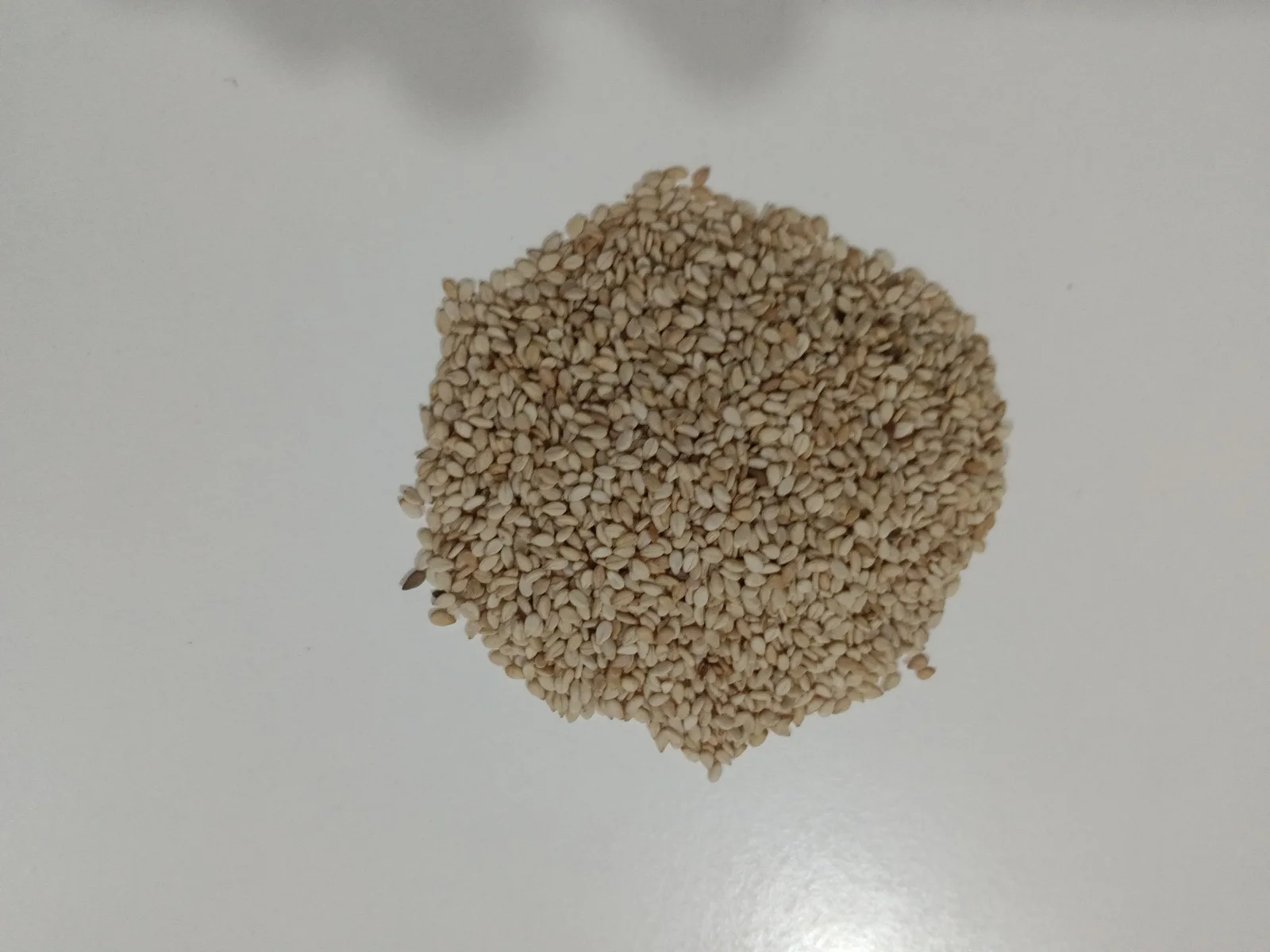
# Natural Sesame Seeds: Uses, Grades, Quality & Applications
Natural sesame seeds (Sesamum indicum) are sesame seeds that retain their natural outer hull. Known for their mild nutty aroma, subtle flavour and naturally high oil content, they are widely used across food processing, sesame oil extraction, tahini, bakery and other food applications.
Natural sesame seeds from India are available in different purity and sorting grades depending on the intended application and processing requirements.
## What Are Natural Sesame Seeds?
Natural sesame seeds are small, flat and oval-shaped seeds that retain their outer hull.
Their appearance typically ranges from whitish to creamy white, with a smooth surface and mild nutty aroma. The flavour is naturally subtle and becomes more pronounced after roasting.
Botanical Name: Sesamum indicum
Origin: India
HS Code: 120740
Natural sesame seeds are different from hulled sesame seeds because the natural seed retains its outer hull, while the hulled variety has the outer layer removed.
## Natural Sesame Seeds from India
India has several important sesame-growing regions, including Gujarat, Rajasthan, Madhya Pradesh and Uttar Pradesh.
Natural sesame seeds can be cleaned and processed according to the required grade. Machine cleaning helps remove foreign matter, while Sortex processing can provide higher purity and improved colour consistency.
The appropriate grade depends on the buyer's intended application and quality requirements.
## Understanding Natural Sesame Seed Grades
Natural sesame seeds are available in different grades based primarily on purity, impurity and colour sorting.
### 99% Standard Grade
Typical specifications include:
Purity: 99% Min
Impurity: 1% Max
Whitish Seeds: 99% Min
Dark Seeds: 1% Max
Oil Content: 48% Min
FFA: 1.5% Max
Moisture: 6% Max
### 99.95% Sortex Grade
Typical specifications include:
Purity: 99.95% Min
Impurity: 0.05% Max
Whitish Seeds: 99.50% Min
Dark Seeds: 0.50% Max
Oil Content: 48% Min
FFA: 1% Max
Moisture: 6% Max
The higher-purity grade may be more appropriate where lower impurity levels and greater colour consistency are required.
Specifications can vary by lot, grade and agreed requirements and should be confirmed before purchase.
## Key Characteristics of Natural Sesame Seeds
Natural sesame seeds are generally characterized by:
• Whitish to creamy-white appearance
• Small, flat and oval shape
• Smooth surface
• Mild nutty aroma
• Subtle nutty flavour
• Minimum 48% oil content in the listed grades
• Different purity grades for different processing requirements
These characteristics make natural sesame seeds suitable for a wide range of food and processing applications.
## What Are Natural Sesame Seeds Used For?
Natural sesame seeds have multiple applications across food and processing industries.
### Sesame Oil Extraction
The listed natural sesame seed grades have a minimum oil content of 48%, making oil extraction one of their important processing applications.
### Tahini
Natural sesame seeds can be used as raw material for tahini-related processing, depending on the processor's required preparation and specification.
### Bakery Products
Sesame seeds are commonly used in breads, buns, bagels and other baked products, either as toppings or incorporated into the formulation.
### Confectionery & Sweets
Their characteristic nutty flavour and texture make sesame seeds suitable for various confectionery and traditional sweet applications.
### Cereals & Granola
Natural sesame seeds can be incorporated into granola, cereal mixes and similar food preparations.
### Asian Cuisine
Sesame seeds are used as ingredients, seasonings and toppings across a variety of Asian food preparations.
### Spice Blends & Food Processing
They can also be incorporated into selected spice blends, seasoning formulations and processed-food products.
## Natural Sesame Seeds vs Hulled Sesame Seeds
The main difference is the outer hull.
Natural sesame seeds retain their outer hull. Hulled sesame seeds undergo an additional process in which the outer hull is removed.
As a result, hulled sesame seeds generally have a softer texture and more refined appearance, while natural sesame seeds retain the characteristics of the whole seed.
The right choice depends on the intended product, processing method, appearance and specification requirements.
## How to Evaluate Natural Sesame Seed Quality
When comparing natural sesame seeds, looking only at appearance may not provide enough information.
Important specification points include:
• Purity percentage
• Impurity percentage
• Oil content
• Moisture
• FFA
• Percentage of whitish and dark seeds
• Cleaning and sorting method
For example, a 99.95% Sortex grade has a lower specified impurity level than a 99% standard grade.
The required grade should therefore be selected according to the final application rather than simply choosing the highest purity available.
## Storage of Natural Sesame Seeds
Proper storage helps maintain product quality.
Natural sesame seeds should be:
• Stored in a cool and dry place
• Protected from high humidity
• Kept in properly sealed packaging
• Protected from insects
• Kept away from direct sunlight
• Preferably stored below 25°C
The stated shelf life is 12 months under proper storage conditions.
## Choosing the Right Natural Sesame Seed Grade
There is no single grade that is ideal for every application.
The appropriate natural sesame seed specification depends on factors such as the intended use, required purity, processing method and desired product characteristics.
A processor focused on higher purity and colour consistency may require a different specification from a processor primarily focused on oil extraction.
For commercial requirements, the grade and applicable specification should therefore be confirmed before purchase.
## Conclusion
Natural sesame seeds are a versatile ingredient used across sesame oil extraction, tahini, bakery, confectionery, cereals, Asian cuisine and other food-processing applications.
Understanding purity, impurity, oil content, moisture and processing method makes it easier to compare available grades and select a specification suitable for the intended application.
For product-specific requirements, always confirm the applicable grade and current specification before making a purchasing decision.
ARPRIC insights
First-hand observations from the ARPRIC team.
When evaluating natural sesame seeds, purity percentage alone should not be the only selection criterion.
The intended application matters equally. Oil processors may place greater emphasis on oil content and processing suitability, while food processors may give additional importance to purity, colour consistency, moisture and appearance.
A better approach is to first define the end application and then select the appropriate sesame seed grade and specification.
Frequently Asked Questions
What are natural sesame seeds?
Natural sesame seeds are Sesamum indicum seeds that retain their natural outer hull and have a mild, naturally nutty flavour.
What is the difference between natural and hulled sesame seeds?
Natural sesame seeds retain their outer hull, while hulled sesame seeds have the outer hull removed, resulting in differences in texture and appearance.
What purity grades are available for natural sesame seeds?
The listed grades include 99% Standard Grade and 99.95% Sortex Grade.
What is the oil content of natural sesame seeds?
The listed specifications provide a minimum oil content of 48%.
What is the moisture specification?
The listed natural sesame seed grades specify maximum moisture of 6%.
What are natural sesame seeds used for?
Natural sesame seeds are used in sesame oil extraction, tahini processing, bakery products, confectionery, cereals, granola, Asian cuisine, spice blends and other food-processing applications.
How should natural sesame seeds be stored?
Store them in a cool and dry place, protected from humidity, insects and direct sunlight, with the packaging properly sealed.
What is the shelf life of natural sesame seeds?
The stated shelf life is 12 months under proper storage conditions.
What is the HS code for sesame seeds?
The listed HS Code is 120740.
How do I choose between 99% and 99.95% natural sesame seeds?
The appropriate grade depends on the intended application and required purity, impurity level, colour consistency and processing requirements.
Sources & references
- ARPRIC Product Specifications & Internal Product Information — Natural Sesame Seeds.
- Product specifications may vary by grade, lot and agreed requirements. Current specifications should be confirmed before purchase.